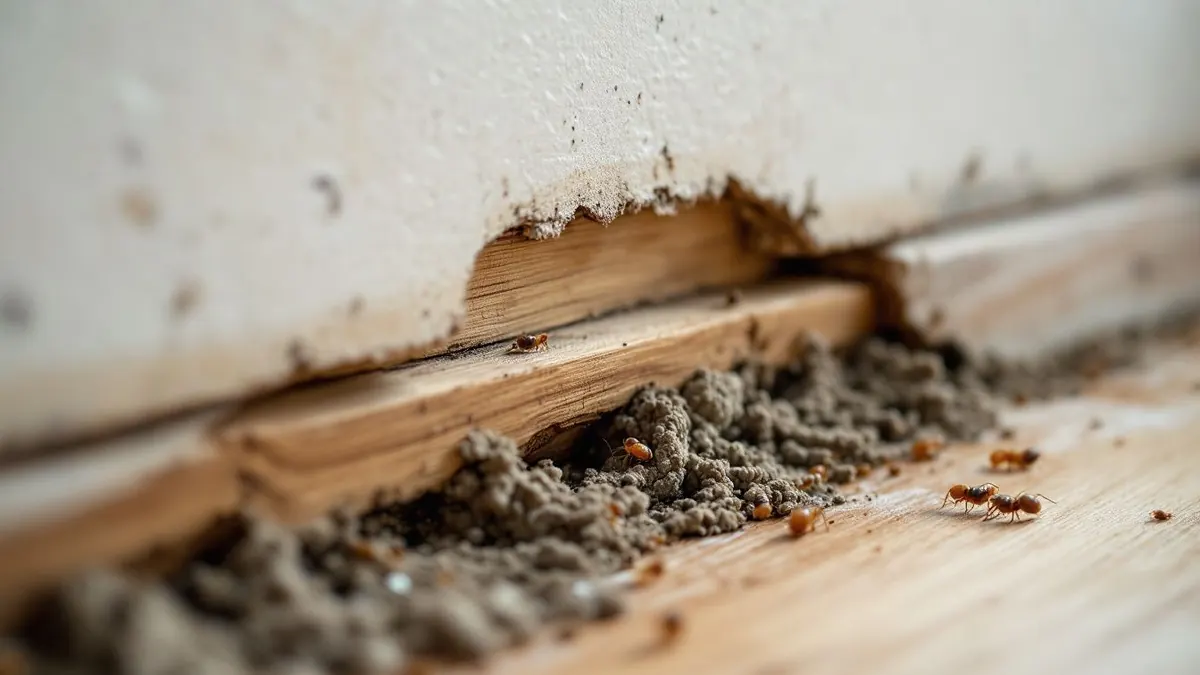
Termites work hidden inside wood, so the signs are easy to miss until damage is done. Here are the clues professionals look for — and what to do if you spot one.
1. Swarmers (flying termites)
Each spring, mature colonies release winged termites to start new colonies. A swarm indoors, especially near windows and lights, almost always means an active colony in or under the house.
2. Discarded wings
Swarmers shed their wings after landing. Small piles of identical, translucent wings on windowsills, in spider webs or near doors are a strong sign.
3. Mud tubes
Subterranean termites build pencil-width tunnels of soil to travel between the ground and wood. Check foundation walls, piers, the crawl space and where the slab meets the wall. Break a section open: if it's rebuilt within days, the colony is active.
4. Hollow-sounding or damaged wood
Tap baseboards, door frames and exposed beams. Termite-damaged wood sounds hollow and may crumble, with galleries packed with soil.
5. Frass (termite droppings)
Drywood termites push out tiny, six-sided pellets that look like sand or coffee grounds, often piling up beneath kick-out holes.
6. Bubbling or peeling paint
Moisture from termite activity behind walls can make paint bubble, resembling water damage.
7. Sticking doors and windows
Termite moisture can warp frames, making doors and windows suddenly hard to open.
8. Sagging floors or ceilings
Advanced damage can weaken joists and subflooring. Floors that feel soft or bouncy need an inspection soon.
9. Tiny holes in drywall
Pinholes where termites have pushed through, sometimes with soil around them.
Termites vs flying ants
| Termite | Flying ant | |
|---|---|---|
| Waist | Straight, thick | Pinched, narrow |
| Antennae | Straight | Bent (elbowed) |
| Wings | Two pairs, equal length | Two pairs, front longer |
What to do if you see signs
- Don't disturb it. Spraying or breaking tubes can push termites elsewhere and hide the problem.
- Collect a sample of wings or insects in a sealed bag for identification.
- Book an inspection — many companies inspect free. See termite control and our termite treatment cost guide.
Frequently asked questions
What time of year do termites swarm?
Most subterranean termites swarm in spring, often on warm days after rain. Some species, including Formosan and drywood termites, swarm at other times, often at night near lights.
Can I see termites themselves?
Rarely. Workers avoid light and stay in wood, soil or mud tubes. That's why indirect signs matter.
How often should I get a termite inspection?
Once a year is the common recommendation, especially in high-risk states. See termite risk by state on our pest control by state page.