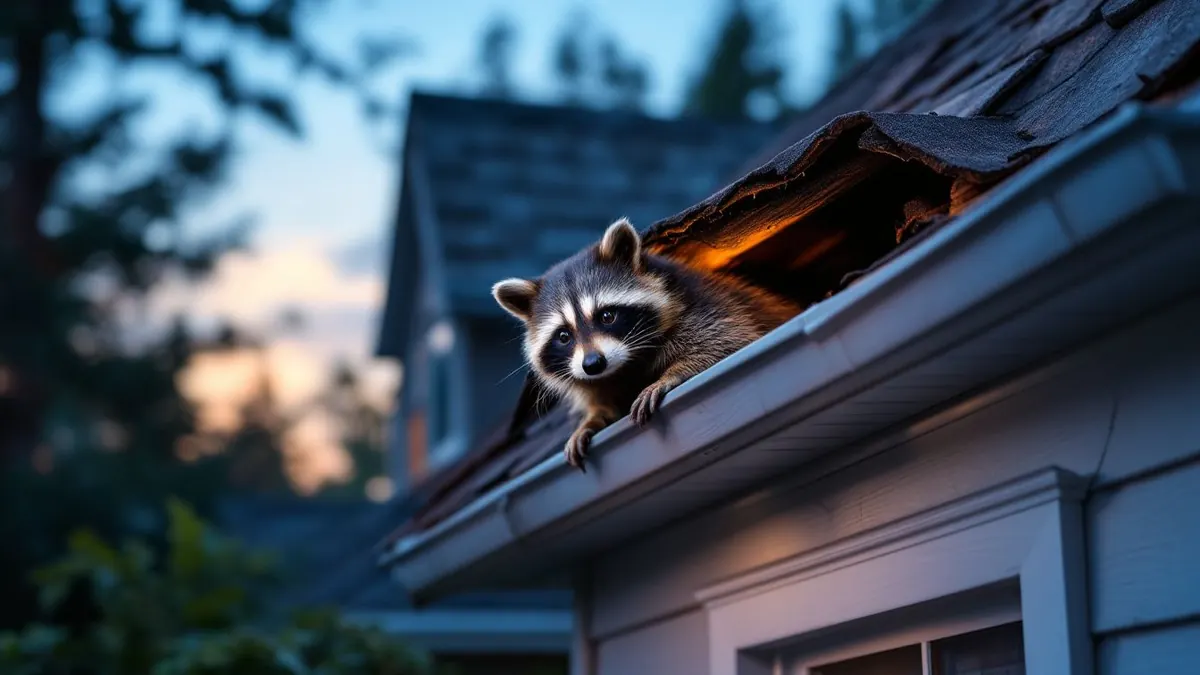
Scratching in the attic at dawn, thumping in the walls at night or a smell you can't explain often means an animal has moved in. Raccoons, squirrels, bats, opossums and skunks can tear up insulation, chew wiring and leave droppings that carry health risks. Raccoons, bats and skunks are also common rabies carriers. Wildlife removal should be done humanely and legally — in many states trapping and relocating wildlife is regulated.
Who's in your attic?
| Animal | Clues |
|---|---|
| Squirrels | Activity at dawn and dusk; chewed fascia and vents |
| Raccoons | Heavy thumping at night; torn soffits or roof vents |
| Bats | Fluttering at dusk; dark droppings (guano) stuck to walls |
| Opossums / skunks | Under decks, porches and sheds; strong odor (skunks) |
| Rats | Night-time scratching; droppings; see rodent control |
How professional wildlife removal works
- Inspection to identify the animal and every entry point.
- Humane removal — live traps or one-way exclusion doors that let animals leave but not return.
- Baby animals: in spring, mothers often have young inside; pros time the work so babies aren't trapped.
- Exclusion and repairs: sealing holes, screening vents and chimney caps.
- Cleanup and sanitation of droppings and damaged insulation.
Bats need special care: many states protect them and restrict exclusion during the summer maternity season. A licensed pro will know the local rules.
Wildlife removal cost
According to 2026 cost guides, wildlife removal averages about $400, with most jobs between roughly $190 and $610. Typical examples:
- Raccoon removal: about $300–$450 for most jobs; up to ~$750 with a nest
- Bat removal: about $230–$700; large attic colonies can cost more
- Attic removal plus cleanup: about $200–$1,500 depending on damage
Frequently asked questions
Can I trap and relocate an animal myself?
Check your state's rules first. Many states require a permit or license to trap and relocate wildlife, and relocation can be illegal for rabies-vector species.
How do I know the animal is gone?
Professionals use one-way doors and monitoring, then seal entry points only once activity stops. Sealing too early can trap animals inside.
Does homeowners insurance cover wildlife damage?
Some policies cover sudden damage caused by certain animals, but not removal or damage from rodents and long-term infestations. Check your policy.