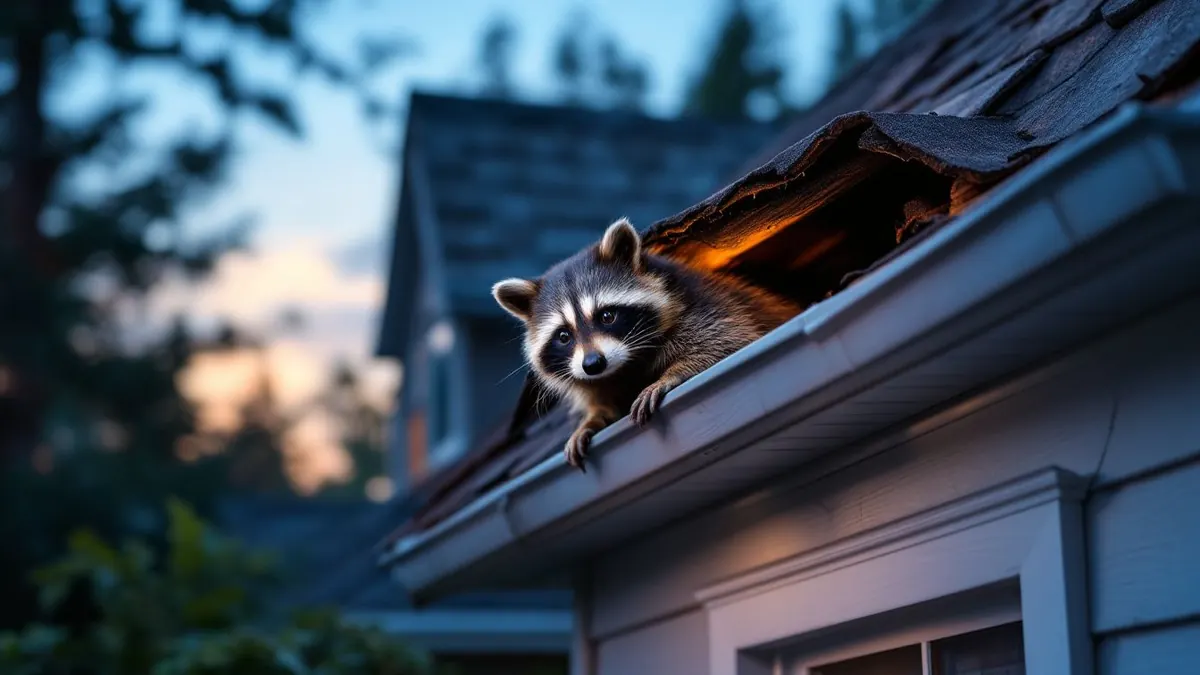
Heavy footsteps, thumping and chattering in the attic at night often mean a raccoon — frequently a mother with kits in spring. Raccoons can tear open roofs and soffits, destroy insulation and ductwork, and leave latrines that carry serious health risks. Removal needs to be done carefully.
Signs of a raccoon in the attic
- Heavy thumping or walking sounds at night
- Chirping, chattering or crying (kits)
- Torn soffits, roof vents, shingles or damaged chimney caps
- Large droppings in piles (latrines) and strong urine smell
- Flattened or torn insulation, damaged ducts
Why raccoons move in
Attics are warm, dry and safe for raising young. Females often look for den sites in late winter and spring, which is when attic raccoon problems peak.
How raccoons are removed
- Inspection to find the entry point and check for babies.
- Babies first: if kits are present, they're typically removed by hand and placed where the mother can retrieve them, or the mother is excluded once the kits are old enough to follow her.
- One-way exclusion doors or live trapping, depending on the situation and state law.
- Repairs and sealing with materials raccoons can't tear open, plus a chimney cap if needed.
- Cleanup and decontamination.
Many states regulate trapping and relocating raccoons because they're a rabies-vector species; a licensed wildlife operator will know the rules.
Health risks: why cleanup matters
Raccoon feces can contain eggs of raccoon roundworm (Baylisascaris procyonis), which can cause serious illness in people if ingested. Raccoons can also carry rabies. Don't handle droppings or animals yourself; professional cleanup removes latrines and treats contaminated areas.
Raccoon removal cost
Raccoon removal typically runs about $300–$450 for most jobs, up to about $750 when a nest with babies is involved, with repairs and cleanup extra, according to 2026 cost guides. See wildlife removal and animals in the attic.
Frequently asked questions
Is it dangerous to have a raccoon in the attic?
It can be — through property damage, fire risk from chewed wires, and diseases from feces and potential rabies exposure. Keep people and pets away from the animal.
Will a raccoon leave the attic on its own?
A mother with kits will usually stay until the young can travel. Exclusion and sealing are needed to keep raccoons from returning.
What scares raccoons out of an attic?
Bright lights, noise and strong smells may make an attic less appealing, but they rarely work alone, especially with kits present. Professional exclusion is more reliable.