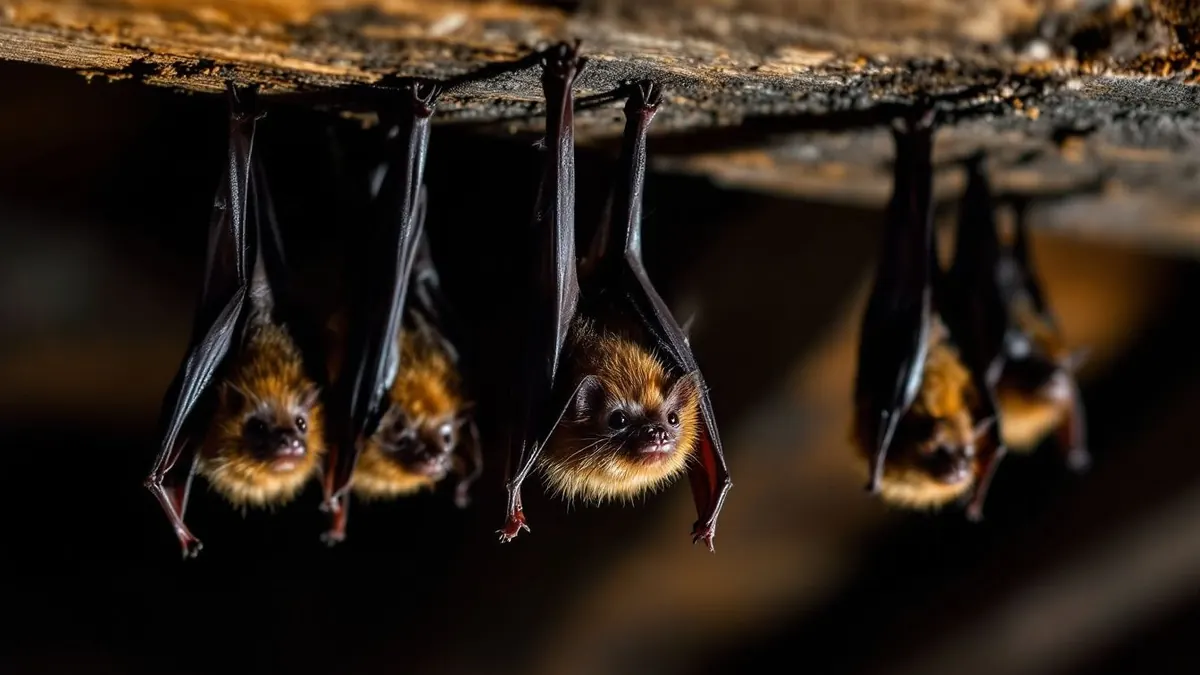
Bats are beneficial — they eat huge numbers of insects — but a colony in the attic brings odor, guano buildup and health concerns. Bat removal is different from other wildlife: in many states bats are protected, killing them is illegal, and there are seasons when exclusion isn't allowed.
Signs of bats in the attic
- Bats flying out at dusk from rooflines, gable vents or gaps
- Squeaking or fluttering in walls or attic at dusk and dawn
- Guano: dark, crumbly droppings that sparkle with insect parts, piled under roosts or stuck to walls
- Brown stains (rub marks) around small entry gaps
- A strong ammonia odor
Timing: maternity season
Bats often form maternity colonies in attics in late spring and summer. Young bats can't fly for several weeks, and excluding the mothers during that time traps the babies inside. Many states restrict exclusion during this period (often roughly June through mid-August, varying by state). A licensed professional will time the work correctly.
How bat exclusion works
- Inspection to find every entry point — bats can use gaps as small as about ⅜ inch.
- Seal all secondary gaps.
- Install one-way exclusion devices (tubes or netting) on the active exits so bats can leave but not return.
- Wait several nights, confirm the colony is out.
- Remove devices and seal permanently.
- Clean up guano and replace contaminated insulation.
Health risks
- Histoplasmosis: a fungal infection from spores that can grow in guano. Don't disturb large guano piles without protection.
- Rabies: very few bats carry it, but never handle a bat. If a bat is found in a room with a sleeping person, child or pet, or anyone may have been bitten, contact your doctor or local health department.
Bat bugs vs bed bugs
Bat bugs look almost identical to bed bugs but feed mainly on bats. After bats are excluded, bat bugs may wander into living spaces looking for a meal. Treating them requires removing the bats and treating the roost. See what bed bugs look like.
Bat removal cost
Bat removal typically costs about $230–$700, with large colonies, extensive sealing and guano cleanup costing more, per 2026 cost guides. See wildlife removal.
Frequently asked questions
Is it illegal to kill bats?
In many states, yes — and several bat species are federally protected. Exclusion is the legal, humane approach.
Can I get bats out of my attic myself?
Small, simple situations sometimes, but timing rules, finding every gap and safe guano cleanup make professional help the safer choice.
What should I do with a single bat in the house?
Close interior doors, open a window or exterior door in that room and let it leave. If there's any chance of contact with a person or pet, contact your doctor or health department about rabies risk.