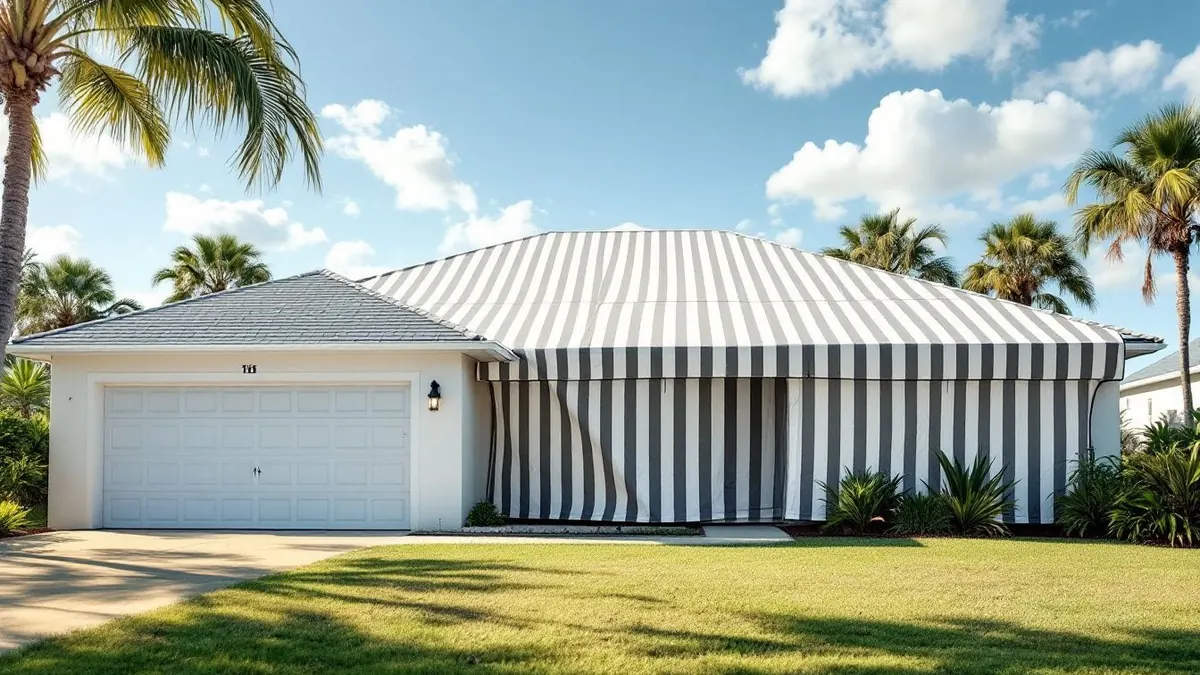
Tenting — whole-structure fumigation — is the standard treatment for widespread drywood termite infestations, especially in Florida, Southern California, Hawaii and other warm coastal areas. The house is covered with tarps and filled with a fumigant gas that penetrates all the wood. It typically costs about $1–$4 per square foot, roughly $2,000–$8,000 for a 2,000 sq ft home, according to 2026 cost guides.
How termite fumigation works
- The crew covers the house with tarps (the "tent") and seals it at the ground.
- A licensed fumigator releases a gas fumigant — commonly sulfuryl fluoride — along with a warning agent.
- The gas stays in the structure for a set time to penetrate wood and kill termites inside.
- The tent is removed, the house is aerated, and the fumigator tests the air before clearing re-entry.
Fumigation kills drywood termites throughout the structure in one treatment, including in places you can't reach. It does not leave lasting protection and isn't the usual treatment for subterranean termites, which live in the soil.
How long do you have to stay out?
Most fumigations require you, your pets and your plants to be out for about 2–3 days, depending on the home, the dose and the time needed to aerate. Your fumigator will give you the exact schedule and the official re-entry time.
Preparation checklist
- Food, medicine and pet food: remove from the home or seal in special fumigation bags provided by the company (unopened factory-sealed metal cans and glass jars are often fine — follow their list).
- People, pets and plants: all out, including fish tanks and indoor plants.
- Gas service: often shut off by the utility; arrange relighting of pilot lights afterward.
- Plants and mulch around the foundation: trim back or water heavily so the tarp seals well.
- Open interior doors, cabinets and drawers so gas can circulate.
- Keys: the company will need access; arrange security for the vacant home.
Tenting costs: what changes the price
| Factor | Effect |
|---|---|
| Square footage / volume | The main driver |
| Roof type (tile, complex rooflines) | Tile roofs and complex shapes cost more to tent |
| Location | Coastal and high-cost markets are pricier |
| Warranty included | Adds cost but may cover re-treatment |
| Extra services | Gas shut-off/relight, bag supplies, security |
Compare methods in our termite treatment cost guide.
Alternatives to tenting
- Spot or localized treatment (wood injection, foams) for small, accessible infestations
- Heat treatment of the structure or sections of it — no chemicals, shorter time out
- Removing and replacing infested wood when it's limited to one area
Whether these work depends on how far the colony has spread. A thorough inspection should map it first — see drywood termites.
Frequently asked questions
Is it safe to go back after tenting?
You return only after the fumigator has aerated the home and tested that the fumigant has dropped below the safe level. Follow their re-entry notice.
Does tenting kill other pests?
Fumigation also kills many other pests inside the structure at the time, such as roaches and bed bugs, but it doesn't prevent new ones from coming back.
How often do you need to tent a house?
There's no fixed schedule. Fumigation doesn't leave residual protection, so new drywood colonies can establish later. Regular inspections catch them early.