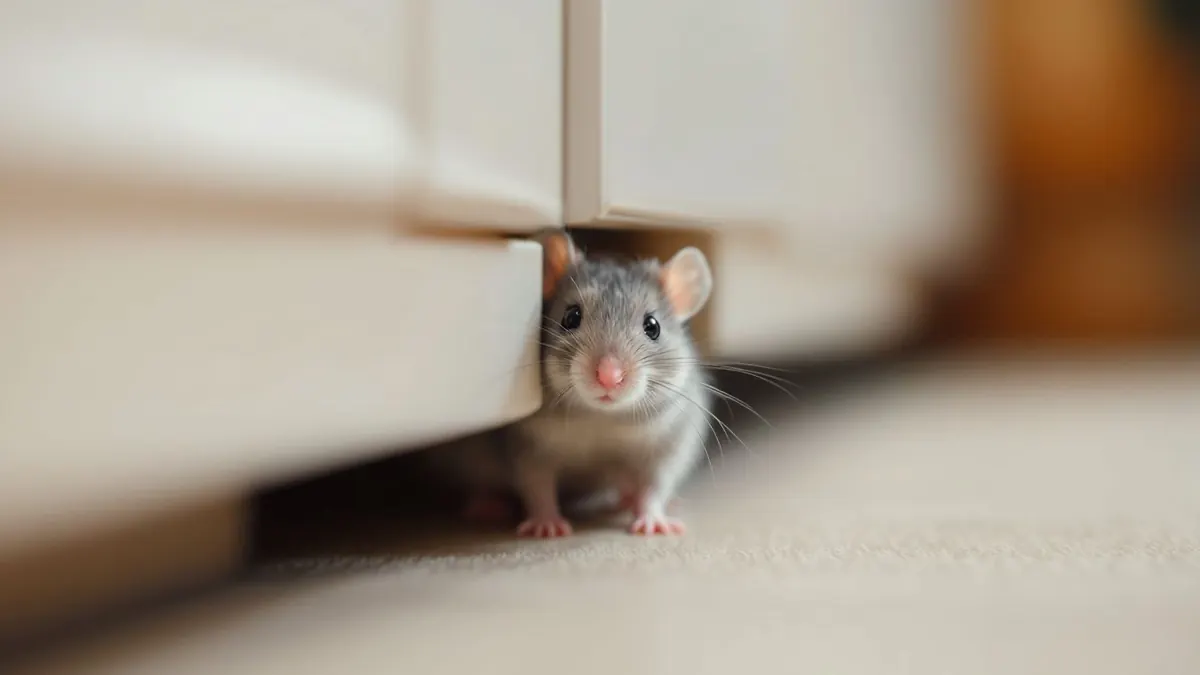
Small dark pellets in the pantry or under the sink are usually the first sign of mice. Identifying them correctly tells you what you're dealing with — and cleaning them up the right way protects your health.
What mouse droppings look like
- Size: about ⅛ – ¼ inch long, like a grain of rice
- Shape: rod-shaped with pointed ends
- Color: dark brown to black when fresh; grayer and crumbly when old
- Where: along walls, in drawers and cabinets, behind appliances, near food
A single mouse can leave dozens of droppings a day, so even a small population leaves plenty of evidence.
Mouse vs rat vs roach droppings
| Mouse | Rat | Cockroach | |
|---|---|---|---|
| Size | ⅛ – ¼ inch | ½ – ¾ inch | Tiny, like ground pepper (German); larger for American roaches |
| Shape | Pointed ends | Blunt or rounded ends, thicker | Blunt with ridges, or smears |
| Where | Scattered along runways | Clustered, near burrows and runways | Corners, hinges, behind appliances |
More on telling rodents apart: rat vs mouse.
Fresh or old?
Fresh droppings are dark, shiny and soft; old ones are dull, gray and crumble easily. Clean up all droppings and check a day or two later — new droppings mean mice are still active.
How to clean mouse droppings safely
Rodent droppings and urine can carry diseases, including hantavirus (mainly from deer mice). The CDC recommends:
- Ventilate the area for at least 30 minutes before cleaning.
- Wear rubber or plastic gloves.
- Don't sweep or vacuum dry droppings — it can stir particles into the air.
- Spray droppings and nesting material with a disinfectant or a bleach solution (1 part bleach to 10 parts water) and let it soak about 5 minutes.
- Wipe up with paper towels and bag the waste.
- Disinfect the area and wash gloved hands, then wash hands again after removing gloves.
For large amounts in attics, crawl spaces or sheds, consider a professional cleanup.
Next steps
Find out how they're getting in and remove them: how to get rid of mice, humane methods or rodent control.
Frequently asked questions
Are mouse droppings dangerous?
They can carry bacteria and viruses. The risk is mainly from breathing in particles or touching contaminated surfaces, which is why safe cleanup matters.
How many mice do I have based on droppings?
It's hard to tell exactly, but droppings in several rooms or large amounts usually mean more than one or two mice.
Can I vacuum mouse droppings?
Not dry. Wet them with disinfectant first and wipe them up. A HEPA vacuum can be used after disinfecting.