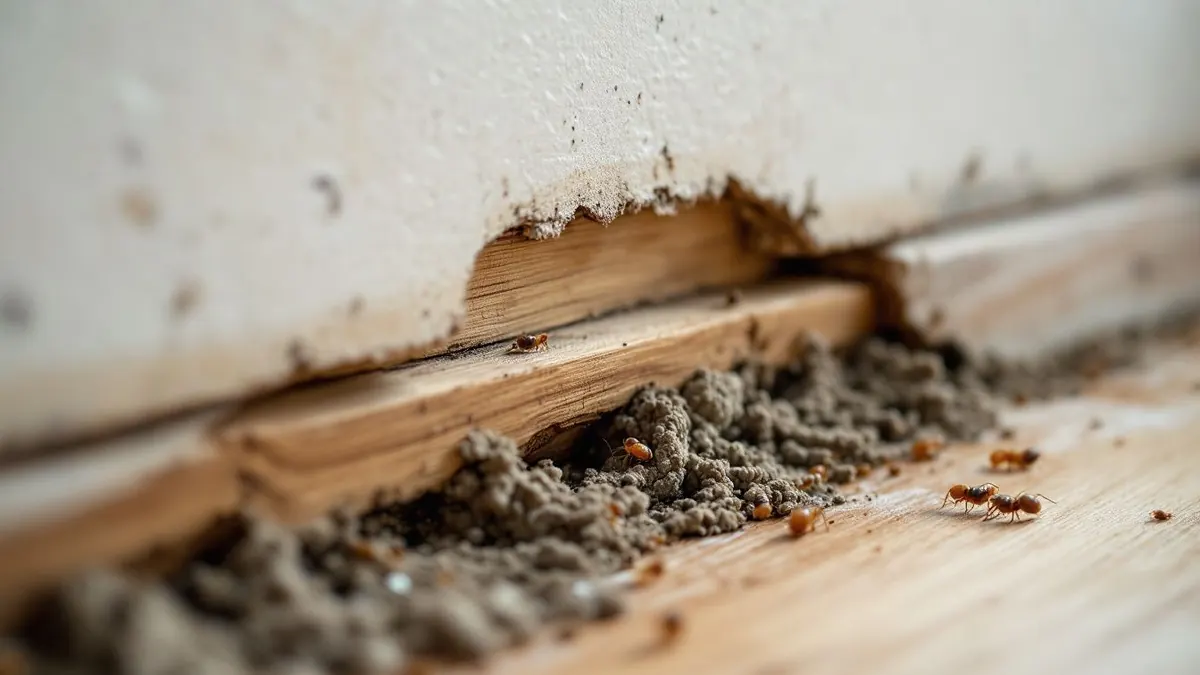
Mud tubes are pencil-width tunnels made of soil, wood particles and saliva. Subterranean termites build them to travel between their underground colony and the wood they eat while staying protected from air and light. Finding them on your foundation, piers or walls is one of the most reliable signs of termites.
What mud tubes look like
- Brown, earthy tunnels about the width of a pencil (wider for main "highways")
- Running up foundation walls, concrete piers, pipes, chimneys or inside wall cavities
- Often in crawl spaces, basements, garages and behind siding or stucco
- Sometimes hanging down from floor joists toward the soil
The four types of termite tubes
| Type | Description |
|---|---|
| Working (exploratory-to-food) tubes | Main travel routes from soil to wood; often wide and well built |
| Exploratory tubes | Thin, branching tubes searching for food; may not connect to wood |
| Drop tubes | Hang down from wood toward the ground to shorten the route |
| Swarm tubes | Short tubes built to release swarmers, sometimes on walls or the ground |
How to tell if mud tubes are active
- Break open a small section (a few inches) in the middle of the tube.
- Look inside for small, pale termites.
- Check back in a few days. If the break has been repaired, the tube is active.
Empty, dry, crumbling tubes may be old — but a colony may still be nearby or using other routes, so an inspection is still worthwhile.
What to do
- Don't knock down all the tubes or spray them; it can make the colony harder to trace.
- Take photos and note their locations.
- Book an inspection — many are free. See termite inspection.
- Read about treatment options for subterranean termites and their cost.
Frequently asked questions
Can other insects make mud tubes?
Mud dauber wasps build mud nests, but they look like clusters of tubes or lumps on walls and eaves, not long tunnels running from the ground. Termite tubes connect soil to wood.
Should I remove mud tubes?
After treatment, old tubes can be removed so new activity is easy to spot. Before treatment, leave them for the inspector.
Do mud tubes mean my house is infested?
They mean subterranean termites are active at or near the structure. An inspection determines how far they've reached.