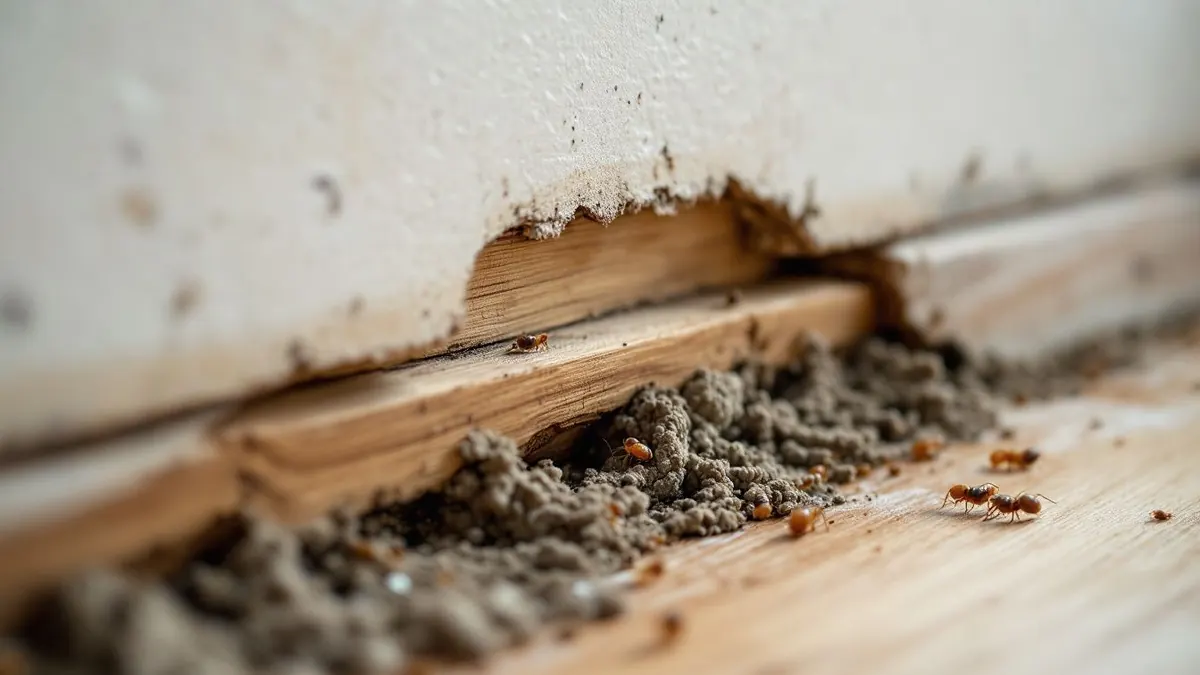
Termite damage often looks like water damage at first: blistered paint, sagging floors, wood that sounds hollow. The difference matters, because termite damage keeps spreading until the colony is treated. Here's how to recognize it and what to expect for repairs.
What termite damage looks like
- Hollow or papery wood that dents easily when pressed with a screwdriver
- Galleries inside the wood: subterranean termites leave tunnels packed with soil; drywood termites leave smooth, clean chambers
- Blistered or bubbling paint and wallpaper, from moisture and tunneling just under the surface
- Sagging or springy floors, buckling laminate or loose tiles
- Tiny pinholes in drywall, sometimes with soil around them
- Mud tubes on foundations or walls — see our mud tubes guide
- Frass (droppings) below wood, a drywood termite sign — see termite droppings
Termite damage vs water damage vs carpenter ants
| Termites | Water damage / rot | Carpenter ants | |
|---|---|---|---|
| Inside the wood | Tunnels along the grain; soil-packed (subterranean) | Soft, crumbly, dark wood | Smooth, clean galleries |
| Debris | Mud, pellet-like frass (drywood) | Mold, musty smell | Sawdust-like shavings with insect parts |
| Live insects | Pale, soft workers avoiding light | None | Large black or red-black ants |
How much does termite damage repair cost?
Repair costs vary enormously. Cosmetic fixes — replacing a baseboard, trim or a door frame — may cost a few hundred dollars. Replacing damaged subflooring, joists, sill plates or wall studs can run into the thousands, especially if walls or floors have to be opened up. A contractor or structural engineer should assess serious damage.
Treat first, repair second. Repairing wood before the colony is treated just gives termites new food. Get the infestation handled, then repair. See termite treatment cost.
Does insurance cover termite damage?
Standard homeowners insurance usually excludes termite damage, treating it as preventable maintenance. That's why termite warranties ("bonds") that include repair coverage are popular in high-risk states — read our termite bond guide.
What to do if you find damage
- Don't tear out wood or spray the area — it can scatter termites and hide the source.
- Take photos and note the locations.
- Book an inspection to confirm whether the colony is active. Many are free — see termite inspection.
- Treat, then get repair quotes.
Frequently asked questions
Can termite damage be fixed?
Yes. Damaged wood can be reinforced (sistered) or replaced once the termites are treated. Severe structural damage should be evaluated by a professional.
How long does it take termites to cause serious damage?
Usually months to years, depending on the colony size and species. Large Formosan colonies can do damage faster.
Is old termite damage a problem when selling a house?
Old damage that's been treated and repaired is common. Buyers and lenders mainly want to see that there's no active infestation and that damage was properly addressed, documented in a WDI report.